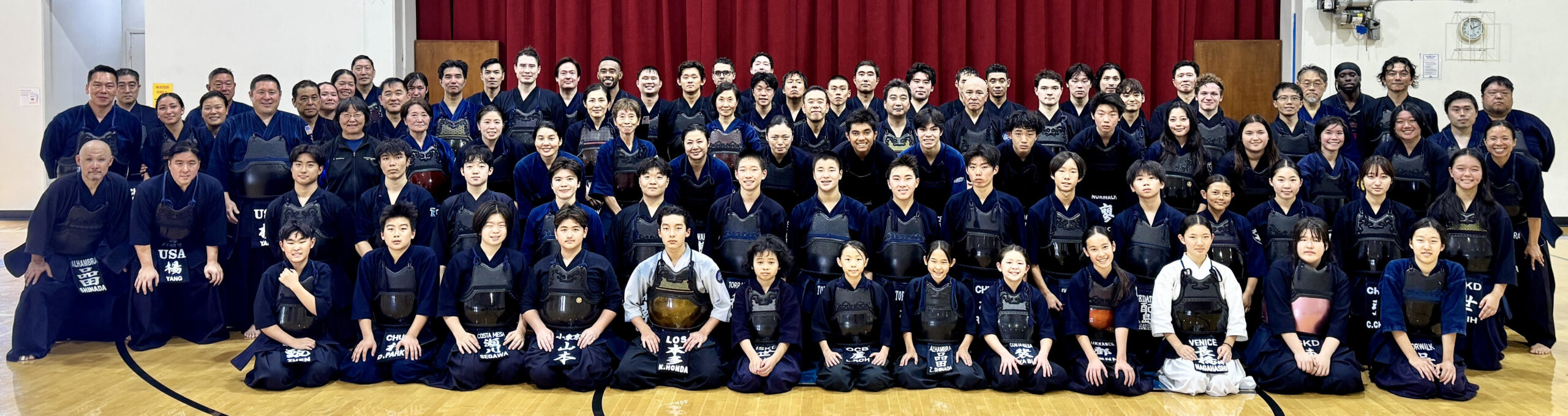
2026 FIK America Zone Referee Seminar to Bring International Kendo Officials to California
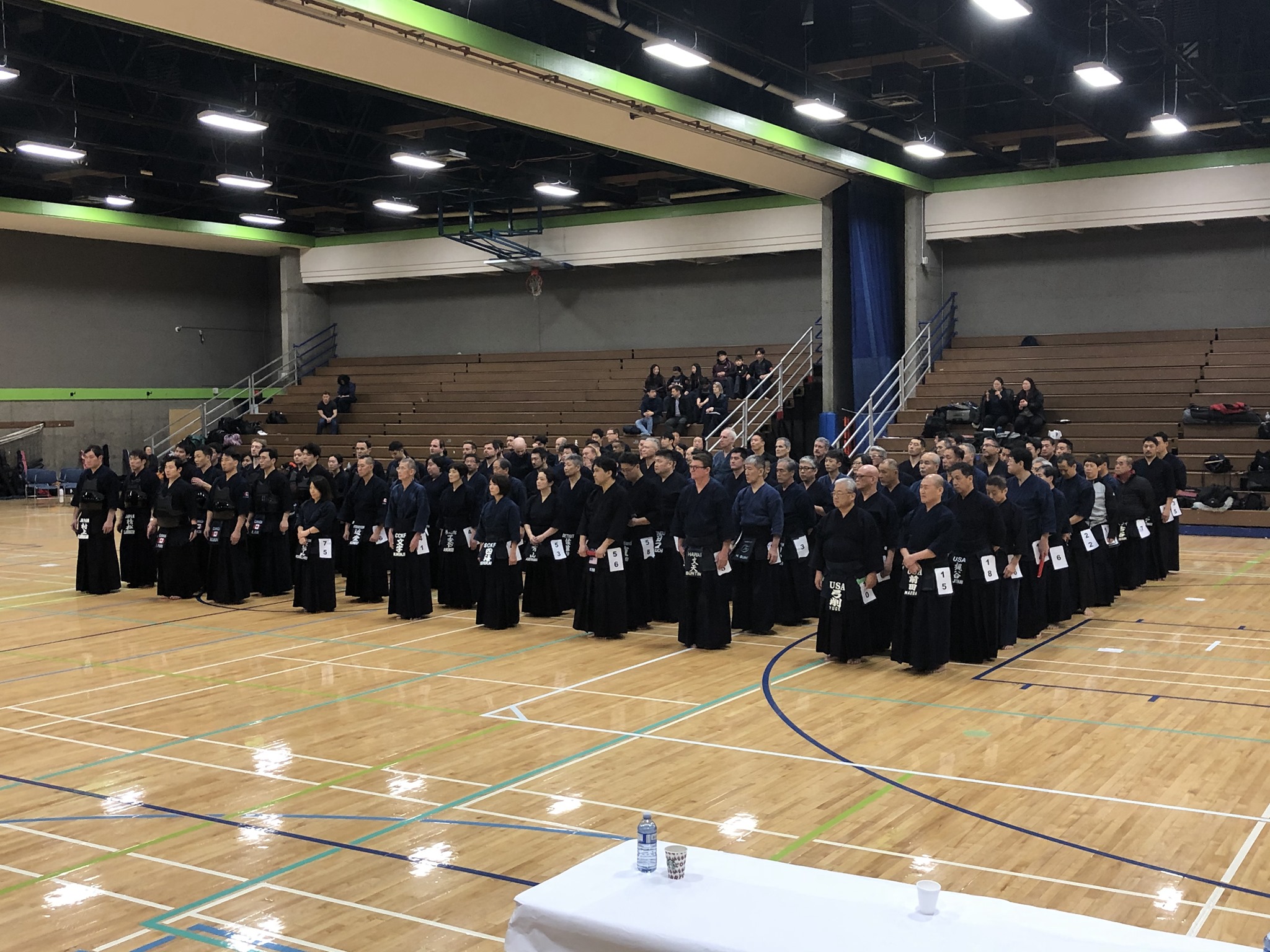
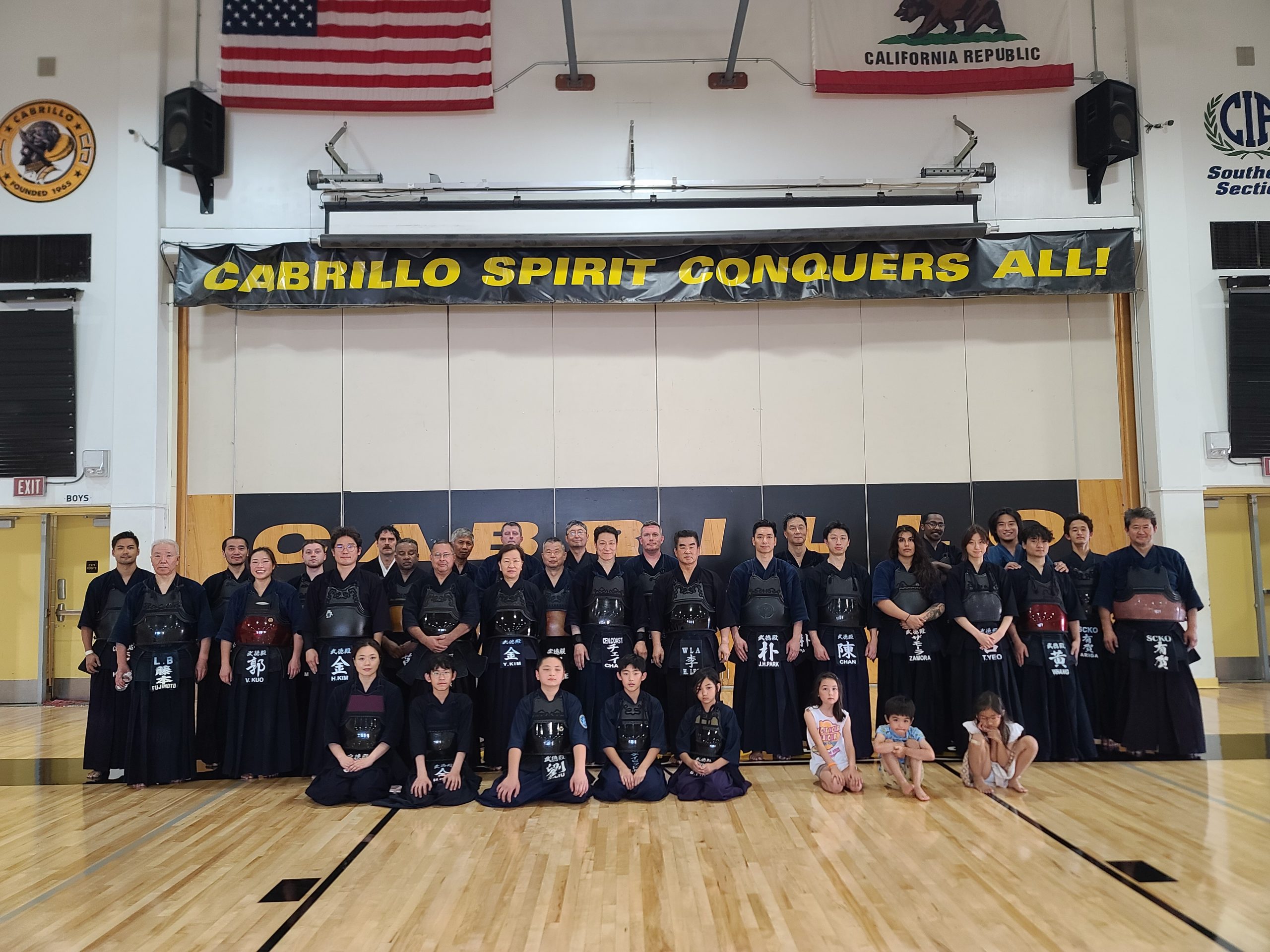
FULLERTON, Calif. — The 2026 FIK America Zone Referee Seminar will take place on September 12–13, 2026, at the Fullerton...
Welcome to the official website of the All United States Kendo Federation (AUSKF). As a non-profit umbrella organization, the AUSKF supports regional member federations by:
If you're new to Kendo, you'll find news and background information on Kendo and Iaido as they are practiced across 49 states in the continental U.S.**
** The Hawaii Kendo Federation (HKF) operates as an independent organization.
FULLERTON, Calif. — The 2026 FIK America Zone Referee Seminar will take place on September 12–13, 2026, at the Fullerton...
Martial arts practitioners and enthusiasts will gather in Lompoc, California, for the 2026 Butokuden Winery Gasshuku, a two-day training event...
LAS VEGAS, Nev. — The All United States Kendo Federation (AUSKF) has officially announced the 2026 Kendo Summer Promotion Examination,...
WASHINGTON, D.C. — A new chapter in American kendo is set to begin in 2026 with the launch of the...
Beginning kendo is an exciting step into one of Japan's most respected martial arts. Whether you were inspired by a...
North American kendo practitioners now have greater access to high-quality Japanese-made shinai through a new partnership between Hokubei Budogu and...
HUNTINGTON BEACH, Calif. — April 11–12, 2026 — Some of the most promising young kendo athletes from across the United...
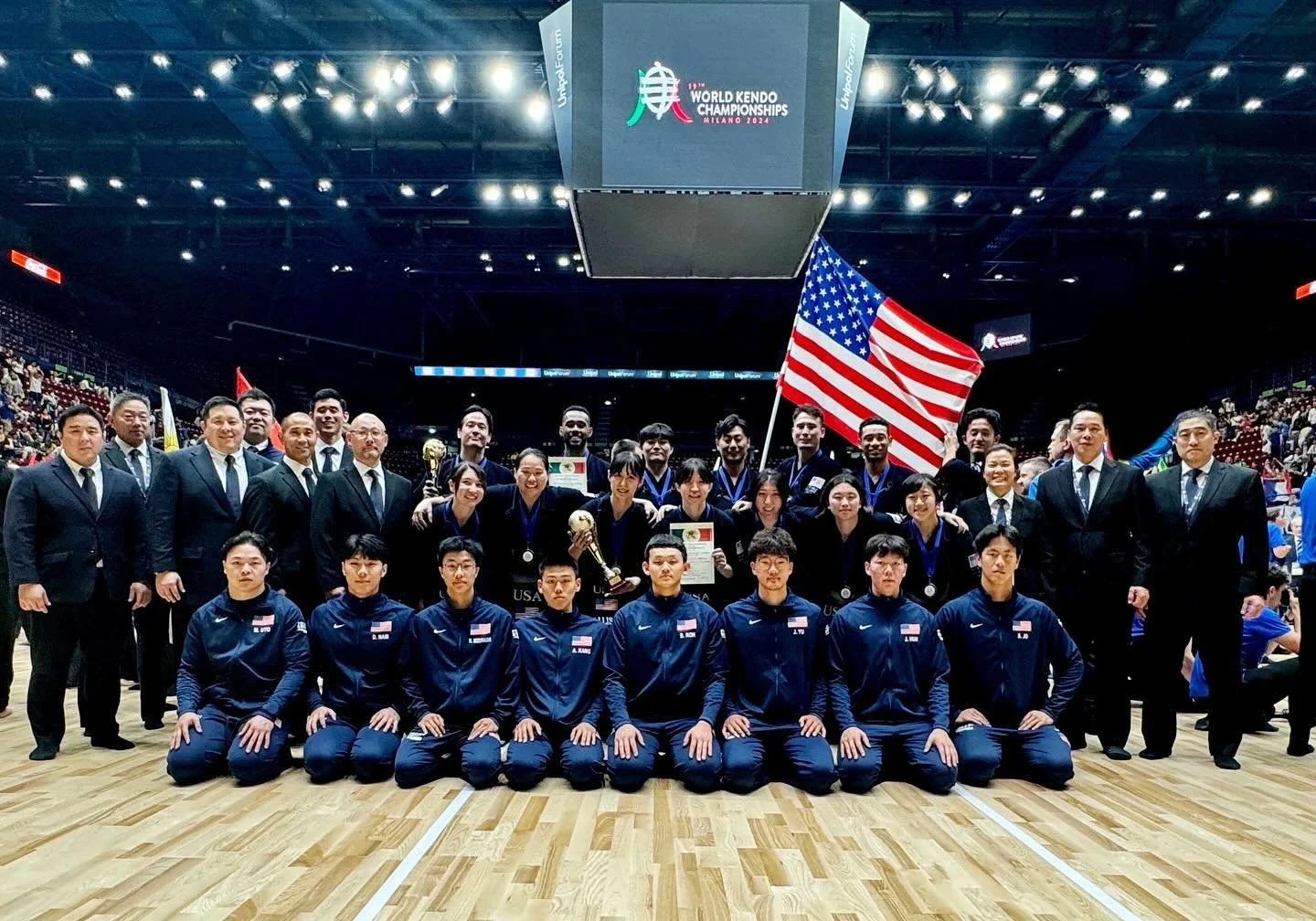
Team USA Kendo has officially launched its extensive two-year training and organizational campaign under the guiding banner of “一期一会 —...
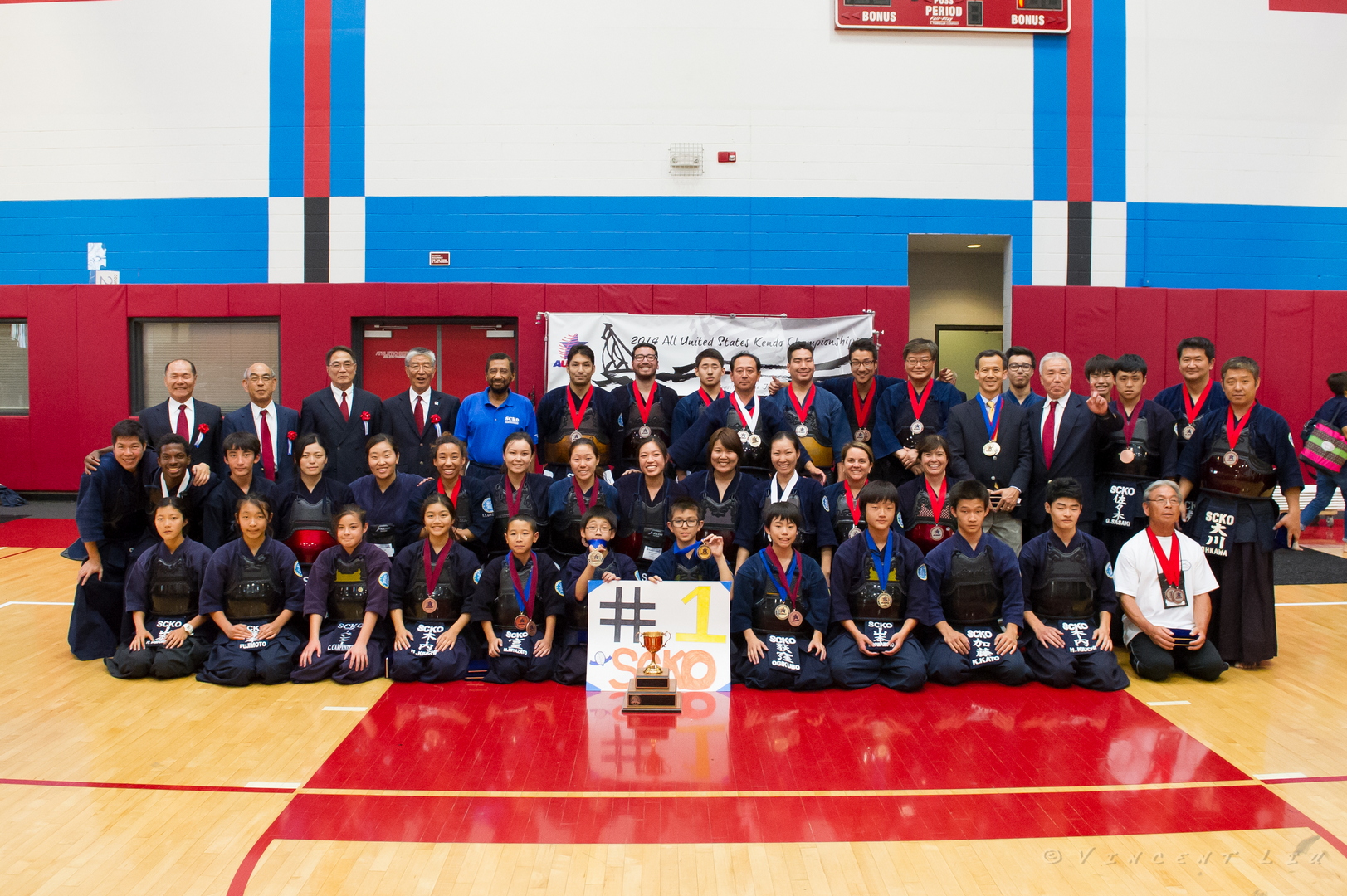
LAS VEGAS, Nev. — Team Southern California Kendo Federation (SCKF) delivered an outstanding performance at the 2026 AUSKF National Kendo...
Subject: AUSKF Kendo Promotion Examination – April 13, 2025
Dear Kendo Practitioners,
We are pleased to announce that the AUSKF Kendo Promotion Examination will be held on April 13, 2025. Please find the details below:
Location:
Duluth High School Gym
3737 Brock Rd NW, Duluth, GA 30096
(Approx. 30-45 minutes from ATL Hartsfield Airport without traffic)
Friday, April 11, 2025
5:30 PM - 7:30 PM – Open Keiko
Forest Fleming Arena, 3037 Pleasant Valley Dr, Atlanta, GA 30340
Saturday, April 12, 2025
5:30 PM - 7:30 PM – Godo Keiko
Duluth High School Gym
Sunday, April 13, 2025
11:45 AM - 12:45 PM – Registration
1:00 PM - 4:00 PM – Testing (5 Dan & Above, Shogo)
Duluth High School Gym
Friday, March 28, 2025
All applications and payments must be submitted by this date—no exceptions.
ATL (Hartsfield-Jackson Atlanta International Airport)
Residence Inn Atlanta Duluth/Gwinnett Place
1760 Pineland Rd, Duluth, GA 30096
Event Dates: April 11-14, 2025
Rate: $99 - $149 per night
Last Day to Book: March 25, 2025
Free Parking | Free Breakfast Buffet | Free WiFi
[Book your group rate for AUSKF]
Residence Inn Atlanta Norcross/Peachtree Corners
Event Dates: April 11-14, 2025
Rate: $99 - $149 per night
Last Day to Book: March 25, 2025
Free Parking | Free Breakfast Buffet | Free WiFi
[Book your group rate for AUSKF]
All applications must be submitted online. Do not send physical documents.
Register here: Kodansha Shinsa Registration
SafeSport Training: Required for all Kodansha examination candidates before applying.
Written Essay Submission: Must be in Word or PDF format. Handwritten essays will not be accepted.
All payments must be made online. If you experience any issues, contact [email protected].
Application fees are non-refundable and non-transferable unless AUSKF cancels the event. We recommend booking refundable flights/hotels.
PayPal refunds will incur a processing fee.
Do NOT pay the menjo fee at registration. Only pay the examination fee when applying.
If you pass, the menjo fee must be paid within two weeks via PayPal ([email protected]).
Late payments may result in cancellation of your new rank.
For any questions, contact [email protected].
Thank you for your dedication to kendo excellence.
Sincerely,
AUSKF Promotion Committee
Dates: February 22nd & 23rd, 2025
Host Organization: All United States Kendo Federation (AUSKF)
Saturday, 2/22: Butokuden Martial Arts Center
Address: 1581 Browning, Irvine, California 92606, United States
Sunday, 2/23: Don Knabe Regional Park Gym
Address: 19700 Bloomfield Ave., Cerritos, California 90703
La Quinta Inn & Suites by Wyndham Buena Park
Address: 3 Centerpointe Dr., La Palma, California 90623
No group reservation available at this time
Please make your own reservation here or stay at your preferred hotel chain.
February 21st, Friday:
February 22nd, Saturday: Butokuden Dojo
February 23rd, Sunday: Don Knabe Regional Park Gym
February 7th by 6:00 PM (PST)
Cash Only (USD)
Formal Referee Suit
The AUSKF is composed of member kendo federations, which traditionally formed based on regional organization. However, federations are no longer strictly bound by geographical location.
Each member federation within AUSKF is allocated a number of representatives proportional to its dues-paying kendo population. These representatives elect the Board of Directors, which in turn selects AUSKF officers. Additionally, the board and officers appoint individuals to serve on various standing committees.
AUSKF membership is available through its federations. To become a member, an individual must join one of the existing AUSKF-affiliated federations. Membership dues are paid through the federation, granting access to AUSKF benefits. Moreover, each federation gains representation at general meetings in proportion to its registered AUSKF members.
President
Michio Kajitani – [email protected]
Executive Vice-President
Yuji Onitsuka – [email protected]
Vice-President for Education
Hayato Okawa – [email protected]
Vice-President for Promotion
Katsuyuki Tamura – [email protected]
Vice-President for Competition
Brandon Harada – [email protected]
Secretary-Historian
Norman Otani – [email protected]
Treasurer
Toshimi Yoshida – [email protected]
Auditor
Keiko Umemura – [email protected]
Iaido & Jodo Committee
Yuji Onitsuka – [email protected]
Insurance Committee
Douglas Imanishi – [email protected]
Information Technology Committee
Taro Ariga – [email protected]
Youth Development Committee
Danny Yang – [email protected]
Anti-Doping Committee
Norman Otani – [email protected]
Henry Lee – [email protected]
Jarrod Hatakeyama – [email protected]
Kenneth Song – [email protected]
Carolyn Yatomi – [email protected]
Michael Lindsay – [email protected]
Yukiko Miura – [email protected]
Chief Executive Advisor
Yoshiteru Tagawa – [email protected]
Senior Executive Advisor
Charlie Tanaka
Jeff Marsten – [email protected]
In Charge: Katsuyuki Tamura (VP of Promotion)
Email: [email protected]
Kendo promotion exams are typically conducted three times a year:
Kendo is the art of Japanese fencing. The term "Ken" (or tsurugi) refers to the sword, while "Do" (or michi) means the way or path. Together, "Kendo" translates to "The Way of the Sword," a discipline that serves as a lifelong journey of training and self-improvement.
Modern Kendo retains only a faint resemblance to Kenjutsu and its feudal origins with samurai warriors, often portrayed in movies and television. Unlike many martial arts, Kendo has no single founder or exact date of origin. Its evolution is deeply intertwined with the samurai and centuries of Japanese culture.
By the end of the 12th century, Japan's central government had weakened, leading to the rise of feudalism. Groups of warriors formed local aristocracies, and with the establishment of the Shogunate in Kamakura, a new warrior class emerged. This class followed Bushido, "the way of the warrior," which emphasized bravery, loyalty, honor, self-discipline, and an acceptance of death. These principles continue to influence modern Kendo.
The samurai not only mastered swordsmanship but also valued learning and the arts. Though Kenjutsu, "the art of swordsmanship," had existed since the 8th century, it gained prominence during this time, incorporating religious and cultural elements. Sword-making became a revered craft, and many samurai practiced calligraphy and poetry.
During the late Muromachi period (1336-1568), known as the "Age of Warring Provinces," martial arts became even more essential. This era saw the rise of approximately 200 Kenjutsu schools, each led by a renowned swordsman. Training initially used real blades or wooden swords without protective gear, resulting in frequent injuries. These schools continued to flourish through the Tokugawa period (1600-1868), with the Ittoryu ("one sword school") exerting the greatest influence on modern Kendo.
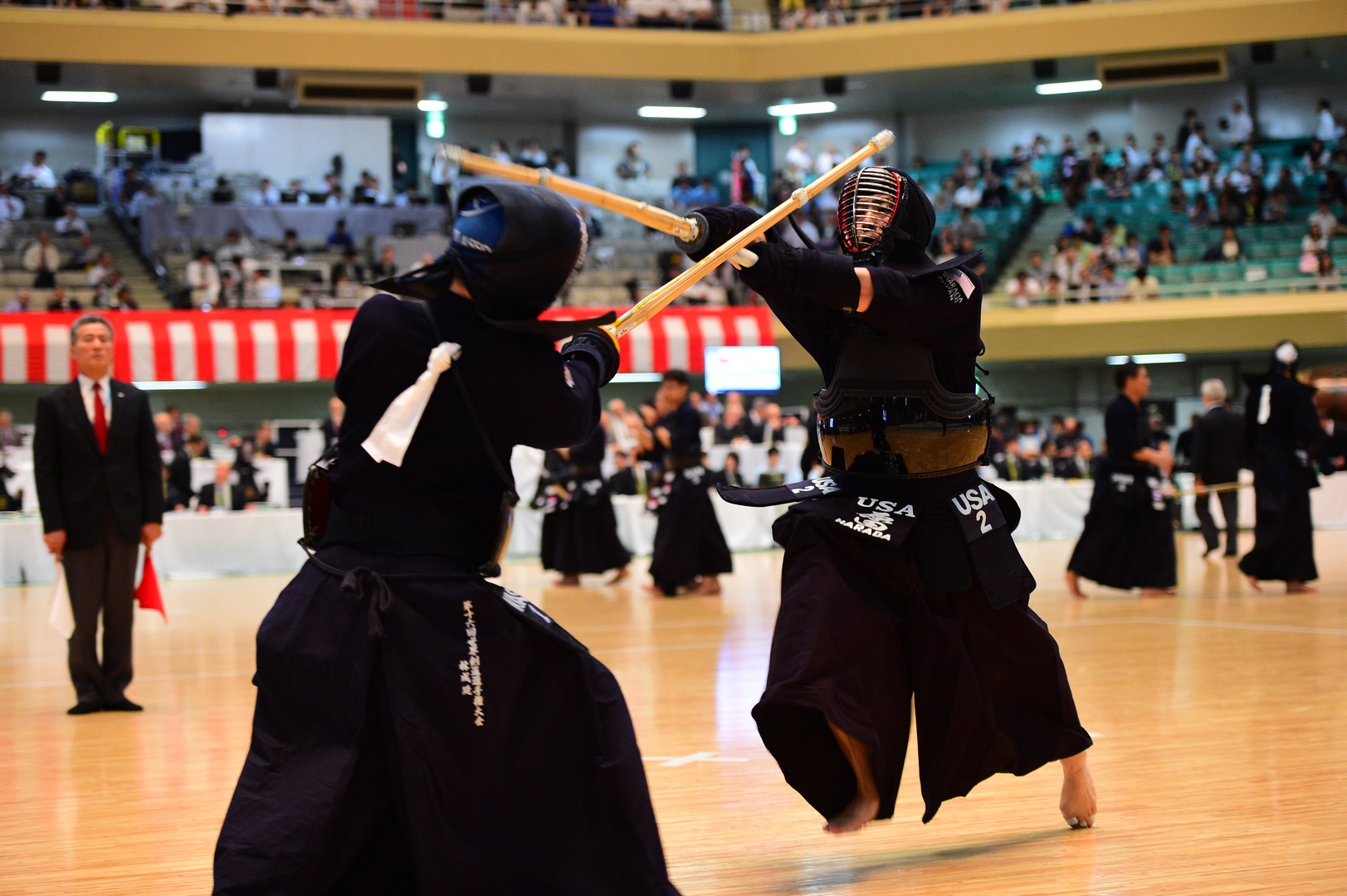
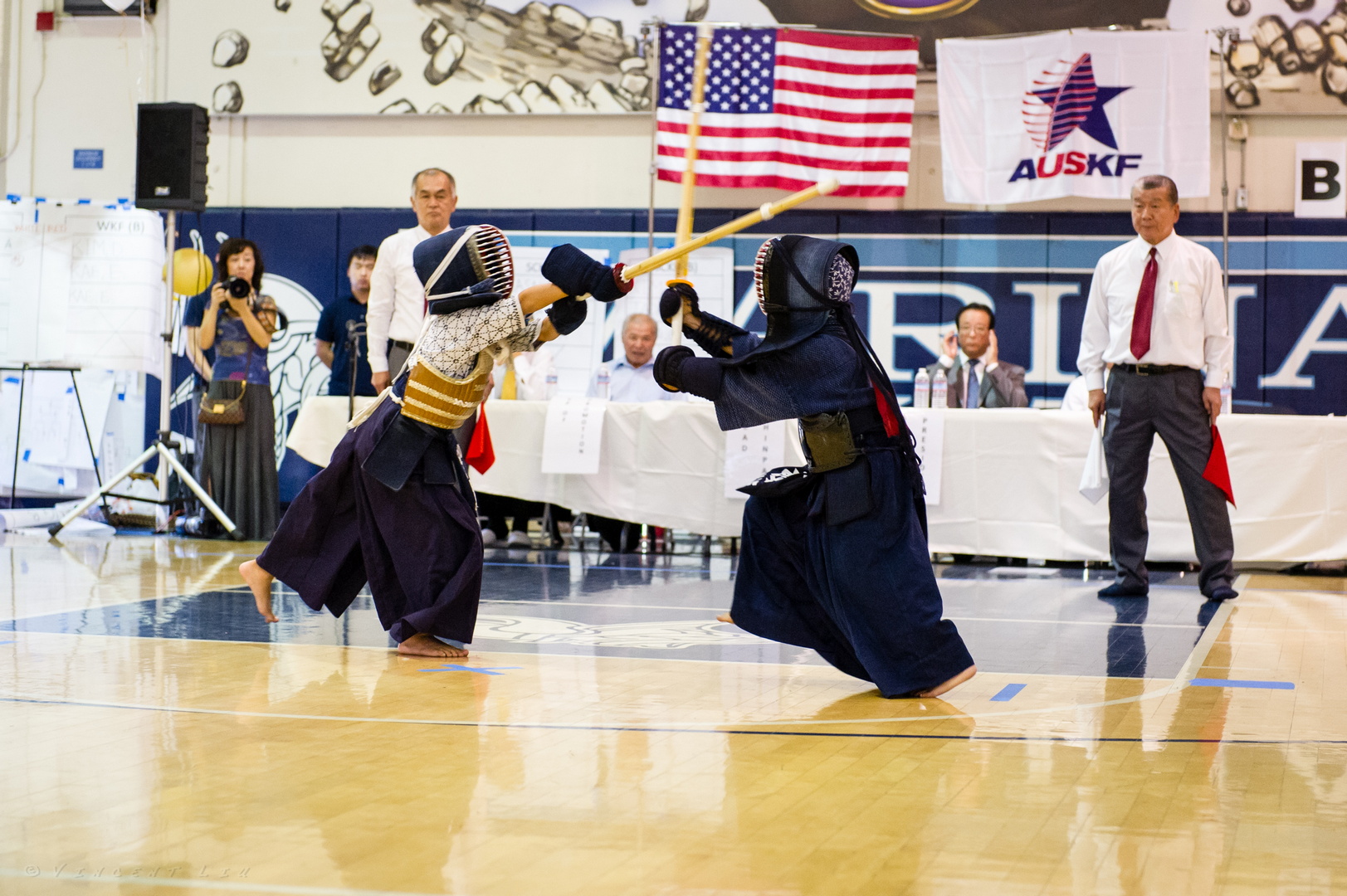
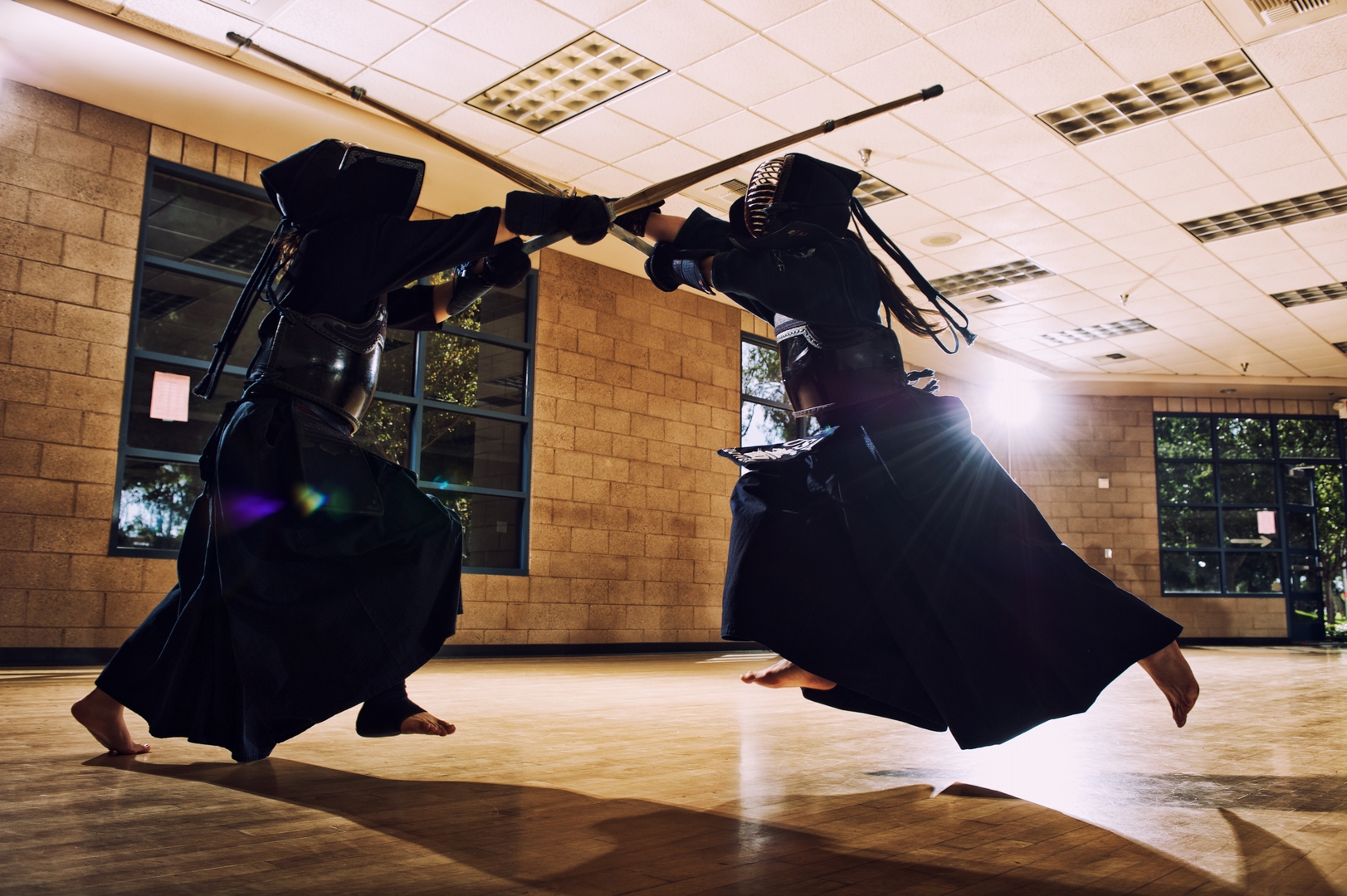
Kendo took its modern form in the late 18th century with the introduction of protective equipment—men (helmet), kote (gloves), and do (chest armor)—as well as the bamboo sword, or shinai. These innovations allowed practitioners to fully engage in sparring without injury, leading to the creation of standardized rules and practice formats.
With the Meiji Restoration (1868) and Japan’s modernization, Kendo declined temporarily. The samurai class was abolished, and carrying swords in public was outlawed. However, by 1887, Kendo was revived for training police officers. The Sino-Japanese War (1894-95) and Russo-Japanese War (1904-05) further renewed interest in martial arts.
In 1895, the Butokukai, an organization dedicated to martial arts, was established. By 1911, Kendo became part of Japan’s middle school physical education curriculum, and in 1912, the Nihon Kendo Kata, a set of standardized forms, was published. In 1939, Kendo became a mandatory subject for boys as Japan prepared for war.
After World War II, due to its association with militarism, Kendo was banned, and the Butokukai was dissolved. However, by 1952, a sport-oriented version called Shinai Kyogi was introduced, emphasizing competition over military training. Today, Kendo thrives under the guidance of organizations like the All Japan Kendo Federation and the International Kendo Federation.
Though modern Kendo has adapted to contemporary needs, it remains deeply rooted in tradition, continuing to foster character, self-discipline, and respect.
Each Dojo has its own interpretation of Kendo’s philosophy. Rather than providing a singular definition, students must explore and develop their own understanding through practice and experience.
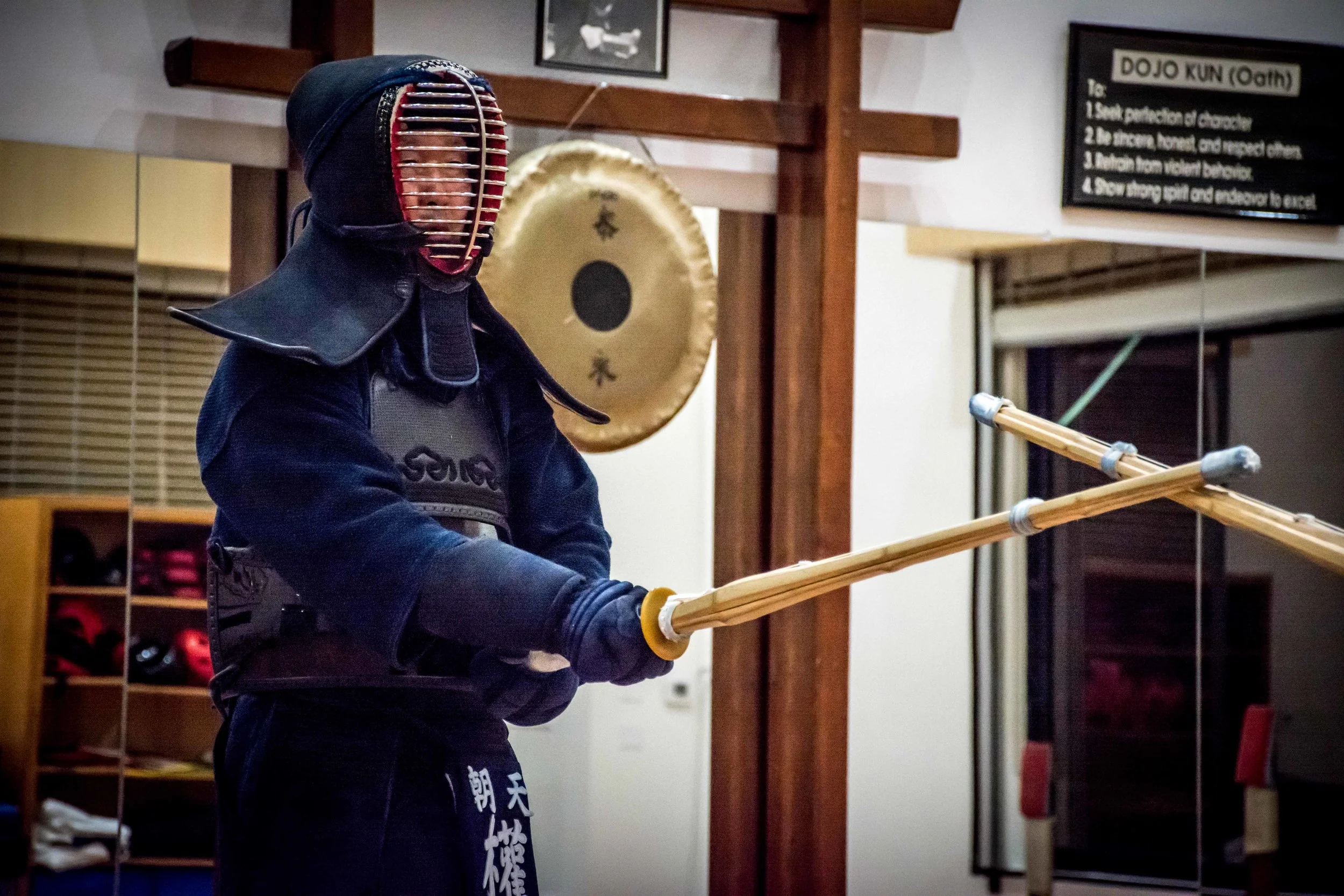
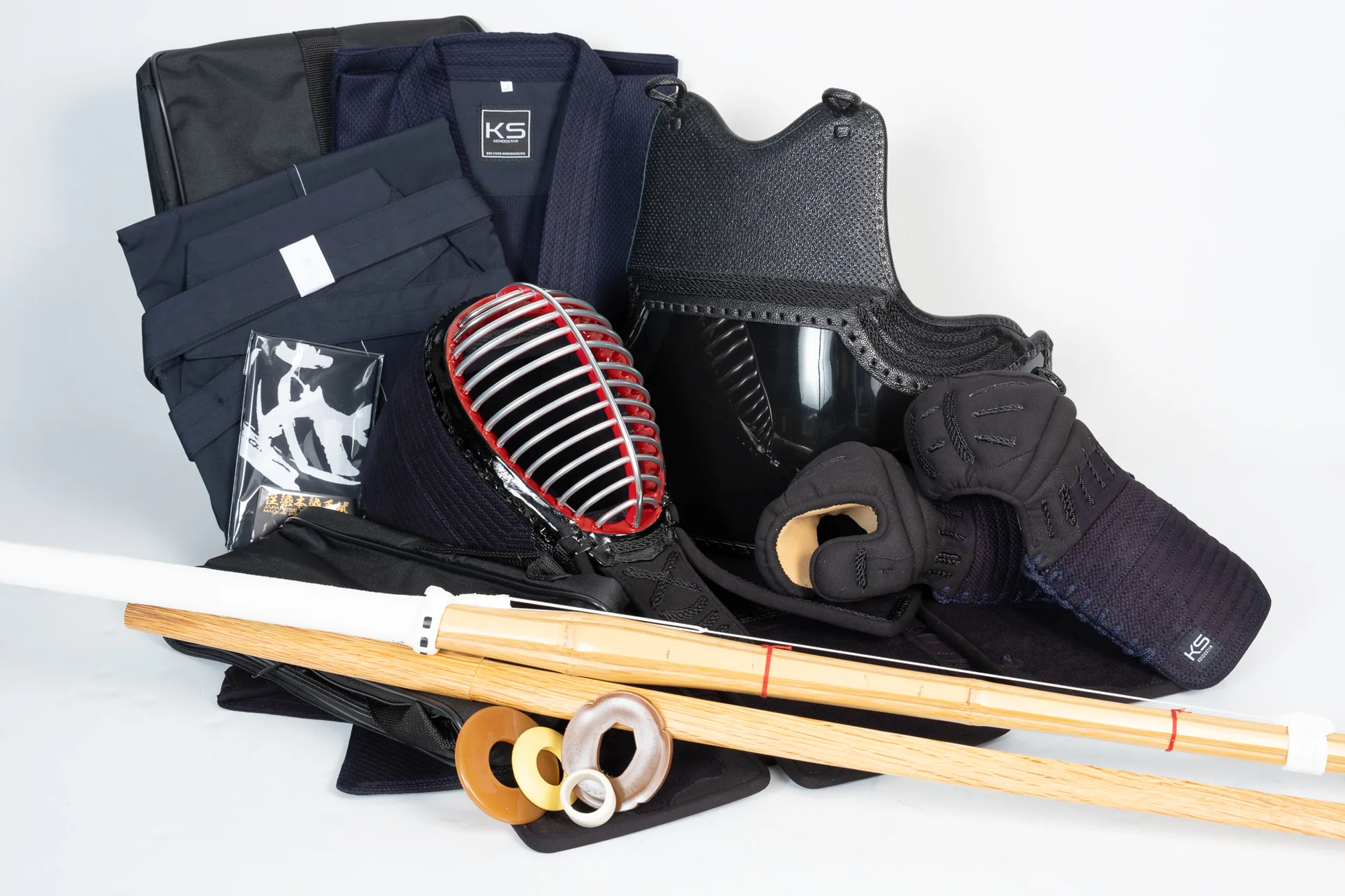
Kendo equipment includes swords, uniforms, and protective armor:
Bokken (or bokuto): A solid wooden sword used for kata (form) practice.
Shinai: A bamboo sword consisting of four staves bound together with leather, used for full-contact sparring.
Uniform (dogi): Consists of a cotton top (keikogi) and pleated trousers (hakama).
Armor (bogu): Includes four pieces:
Men: Helmet with face protection.
Do: Chest protector.
Kote: Padded gloves for hand and forearm protection.
Tare: Hip and groin protector.
Modern Kendo armor is inspired by the samurai's Oyoroi armor.
Kendo training incorporates various types of practice, each serving a distinct purpose in a student's development:
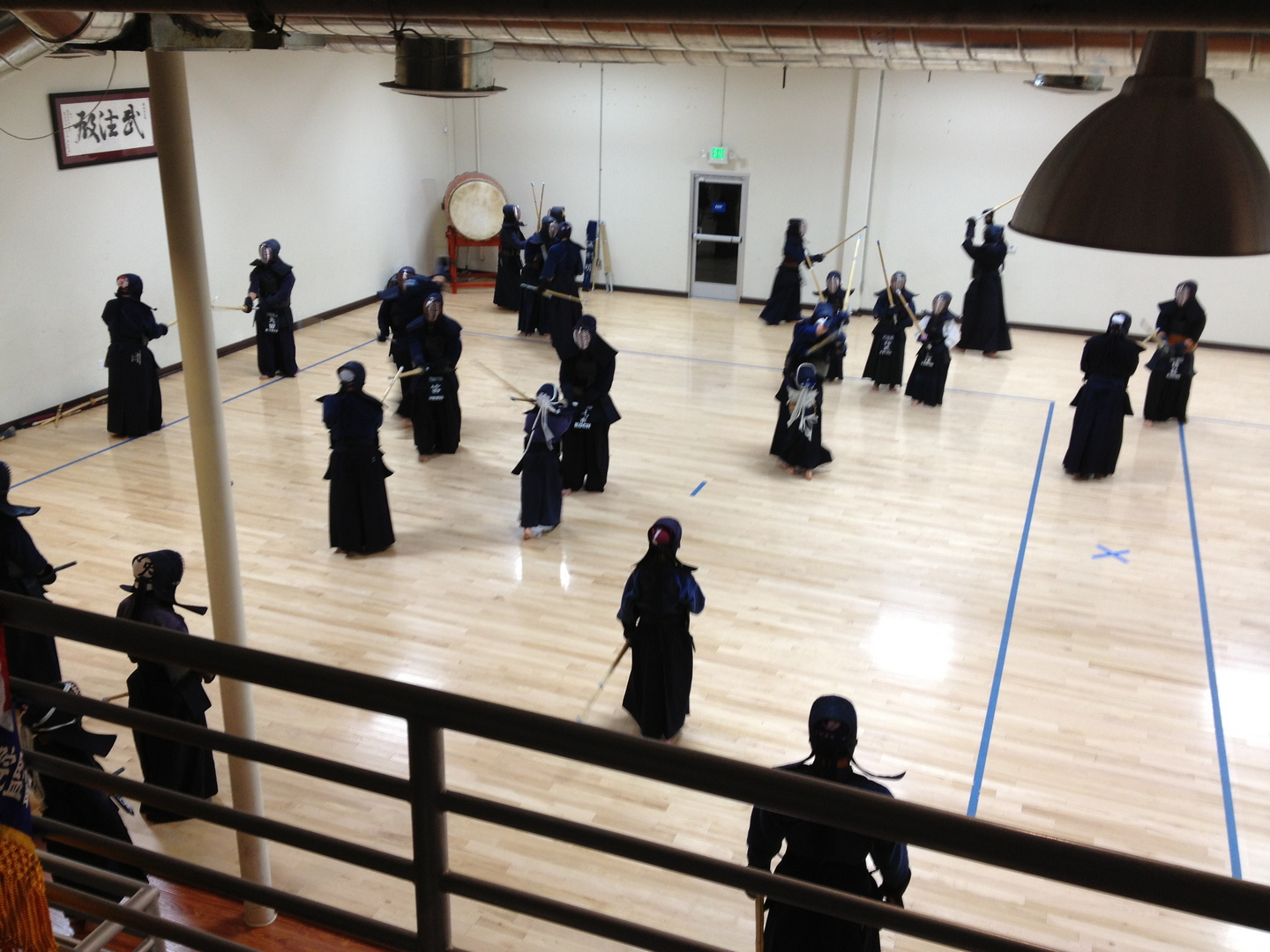
Kiri-Kaeshi: Repetitive strikes to the left and right men, emphasizing centering, distance, and precision while building stamina and spirit.
Waza-Geiko: Technique practice with a partner to refine different Kendo moves.
Kakari-Geiko: Short, intense attack drills designed to improve reaction speed and endurance.
Ji-Geiko: Sparring sessions where practitioners apply their learned techniques against an opponent.
Gokaku-Geiko: Sparring between two students of similar skill levels.
Hikitate-Geiko: A senior practitioner guides a junior student through a practice session.
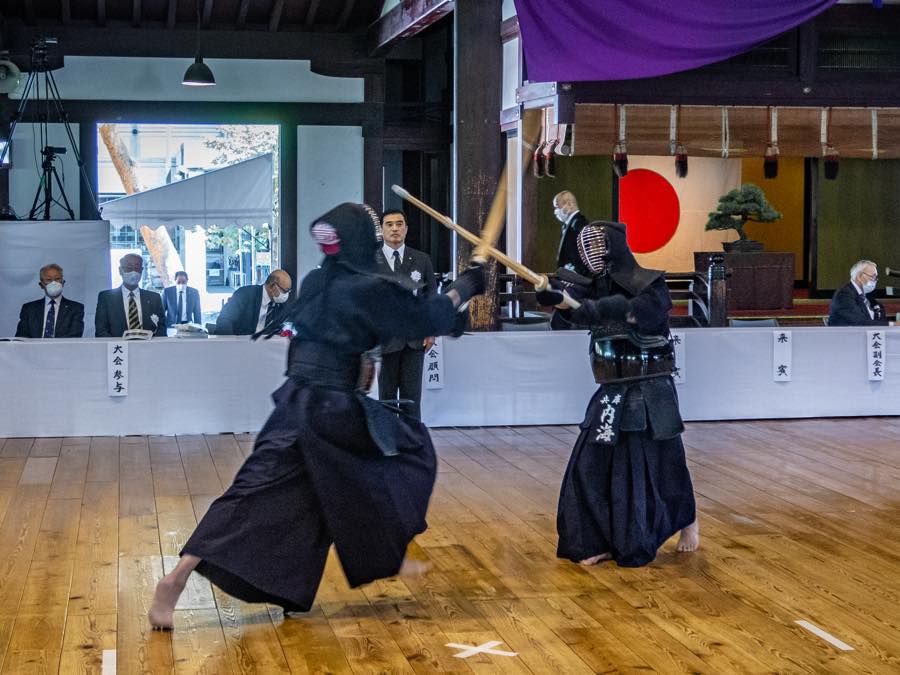
Shiai-Geiko: Competitive matches judged based on valid strikes.
Kendo, like all martial arts, demands discipline and dedication. Beginners start by learning etiquette (reigi), postures, footwork, and basic sword movements before progressing to armored training. Despite its competitive aspects, Kendo remains a path of personal growth, deeply embedded in history and tradition, ensuring its endurance for generations to come.